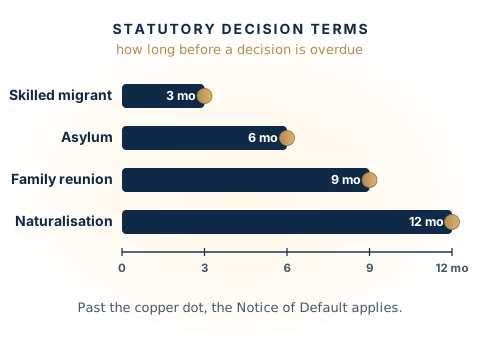
RWN 9(4) · twelve-month decision term for naturalisation
Article 9(4) of the Rijkswet op het Nederlanderschap (RWN), the Dutch nationality statute, sets a twelve-month decision term for naturalisation applications. The term is calendar twelve months from the date the IND received the complete application. When the term has passed, the same Notice of Default + daily penalty + court route applies as for any other Dutch administrative decision under Awb 4:13 and Awb 4:17. The naturalisation route has one quirk: the background check.
RWN 9(4) · twelve-month decision term for naturalisation
Article 9(4): "Op een verzoek om naturalisatie wordt binnen een jaar na de indiening ervan een beschikking gegeven." In English: a decision on a naturalisation request shall be given within one year of the date of filing. The statute is unambiguous on the term. It is the longest term in the Dutch immigration-decision regime, reflecting the substantive depth of the citizenship check.
Twelve months is the term. Not eighteen, not "as soon as possible". RWN 9(4) is the figure to write into the Notice.
The clock starts on the date the IND received the complete naturalisation request. The IND issues an automatic ontvangstbevestiging confirming the date. Like every other Awb-governed file, suspensions under Awb 4:15 apply: if the IND requests missing information under Awb 4:5, the clock pauses until the response is filed. The background-check process does not suspend the clock; it runs in parallel.
The naturalisation process involves a background check by the Algemene Inlichtingen- en Veiligheidsdienst (AIVD), the general intelligence and security service, where the IND has grounds to refer. The AIVD response can take many months. Importantly, the AIVD check does not formally suspend the RWN 9(4) clock unless the IND has invoked an Awb 4:5 request for further information. Most cases do not involve an AIVD referral; the standard background check is the IND's own.
Every naturalisation Notice of Default we draft cites both RWN 9(4) (the procedure-specific 12-month term) and Awb 4:13 (the general framework). The pairing makes clear that the substantive citizenship statute and the procedural administrative-law framework both apply. The daily penalty follows under Awb 4:17 regardless of which is cited as the operative term.
Naturalisation files are the longest-term immigration files we handle. We do not push files before the 12-month mark; the IND has the time. Once the 12 months have passed, we treat the file like any other Awb-governed delay: the Notice goes out at €8.75, the daily penalty follows automatically, the escalation step at €12.40 covers the Ombudsman complaint and the court-appeal bundle preparation. The naturalisation grant itself stays with the IND; we only push for the decision to be given.