The Hague, across from the Nationale Ombudsman
MPMigrationProvisionThe Hague · Administrative Justice
How-to · the deadline math

Calculating the deadline correctly is four steps and one piece of paper.

The single most common reason a Notice of Default fails is that the elapsed time was calculated against the wrong start date or without subtracting suspension periods. The math is not complicated. Four steps, one piece of paper, two dates: the date the authority received the complete application, and any suspension periods. The applicable statutory term then tells you whether the deadline has been breached.

Four steps · start date, applicable term, suspensions, comparison

The four steps

  1. 1
    Find the start date
    The date the authority received the complete application. The ontvangstbevestiging (acknowledgement of receipt) carries this date. For Mijn IND submissions, the submission timestamp. For embassy intake, the embassy's date stamp.
  2. 2
    Identify the applicable term
    The procedure-specific statute names the term. See the table below. If no statute names a term, the residual eight-week term in Awb 4:13(2) applies.
  3. 3
    Subtract suspensions
    Any Awb 4:15 suspension (typically a request for more information under Awb 4:5) pauses the clock. The suspension period runs from the date of the request to the date your response was received.
  4. 4
    Compare effective elapsed to the term
    Effective elapsed = calendar period from start to today − total suspension days. If effective elapsed > statutory term, the deadline has been breached and the Notice is ready.
Two dates on one page. The ontvangstbevestiging date and the suspension dates. The rest is arithmetic.

Applicable terms

ProcedureTerm (days)Source
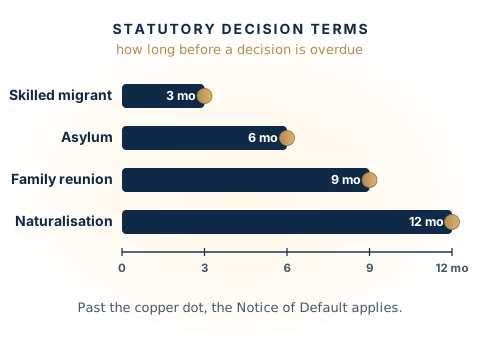
Asylum (general)180 (6 months)Vw 42 · EU Dir. 2013/32
Family reunification (MVV / family follow-on (nareis))90 (3 months) · 270 (9 months) EU ceilingVw 25 · EU FRD 5(4)
Highly-skilled migrant (kennismigrant)90 (3 months)Vw 25
ICT permit90 (3 months)Vw 25
EU Blue Card90 (3 months)EU Dir. 2009/50
Other regular residence90 (3 months)Vw 25
Naturalisation365 (12 months)RWN 9(4)
Residual (no specific term)56 (8 weeks)Awb 4:13(2)

Worked example 1 · highly-skilled migrant extension

Application received: 5 January. Awb 4:5 request for more information: 1 March. Response filed: 12 March (11 days). Today: 20 May.

Worked example 2 · family reunification with EU ceiling

Application received: 1 January. No suspensions. Today: 1 July.

Worked example 3 · naturalisation

Application received: 1 January 2025. No suspensions. Today: 1 February 2026.

Edge cases

What to put in the Notice

The Notice's timeline paragraph names: date received, applicable statutory term, any suspension periods with start and end dates, effective elapsed, breach by X days. That paragraph alone, with a copy of the ontvangstbevestiging attached, is enough to prove the term has been breached. No further argument is needed for the Notice itself.

Where MigrationProvision sits

Our intake collects the ontvangstbevestiging and any Awb 4:5 request for more information. The system computes the effective elapsed automatically and shows whether the term has actually been breached. About one in five files turns out to be still inside the term after suspensions are subtracted. Those files are refunded; the rest get the Notice the same day.

FAQ

Frequently asked questions.

From which date does the statutory term run?
From the date the authority received the complete application. The ontvangstbevestiging carries this date.
What if I submitted documents in waves?
The clock starts when the file is complete. If the authority asked for more under Awb 4:5, the period before the response counts as suspension. The first complete-receipt date is the operative start.
Are weekends and holidays counted?
Yes. Statutory terms run in calendar days unless the source statute says otherwise. Awb 4:17's 14-day Notice window is also calendar days.
Does a status email (in behandeling) pause the clock?
No. Only a formal Awb 4:5 request for more information pauses the clock. Status updates do not.
How do I know if my Awb 4:14 extension is valid?
It must be in writing, before the original term, name a specific further date, and give a reason. See our dedicated article.
What if the IND has been waiting for biometrics from the embassy?
If the embassy intake is a mandatory contribution under the procedure, Awb 4:15(1)(b) suspends the clock during the wait. The suspension ends when the IND receives the biometrics.
Can the IND change the start date later?
Only by demonstrating that the original file was incomplete and a request for more information was issued. The change-of-start-date claim is challengeable in court if no such request exists.
What is the residual term for procedures without a specific statute?
Eight weeks, under Awb 4:13(2). Most immigration procedures have their own term in Vw or RWN; the residual term is the rare fallback.
How precise does the calculation need to be?
Exact to the day. The Notice cites specific dates. Off-by-one errors invite an IND defence about premature filing.
Can MigrationProvision do the calculation for me?
Yes. The €8.75 intake includes the suspension audit and the term calculation. If the term has not actually been breached, the fee is refunded.
Related reading
awb 4 13 explainedawb 4 15 suspension explainedawb 4 14 extension letterproving your deadline passedNotice of Default (ingebrekestelling) immigration

Want the deadline calculated correctly?

Our intake does the math against the ontvangstbevestiging and any suspension letters. Refund if the term has not actually passed.

Open a file · €8.75